


Article 1: The Meme Gold Rush — Why Brands Can’t Resist stealing IP. Case Study: Aftershoot

Updated: Jan 11
This series is to showcase that memes are being used, most likely without permission from their copyright owners. And that if businesses have no problem using intellectual property from huge entertainment corporations, A list actors, or even the faces of people who have become famous through an internet sensation, they wouldn't have any problem using a smaller artist's IP without their permission and without compensation.
Take a scroll through Reddit, Instagram, or X and you’ll see them everywhere: a familiar movie still, a beloved character, a viral reaction image—now paired with a company logo and a call to action.

What started as grassroots internet humor has now become a powerful advertising tool. But in the rush to feel relevant, many businesses are quietly crossing legal and ethical lines.
Memes as Marketing Shortcuts
Memes work because they arrive pre-loaded with meaning. A single image can communicate irony, nostalgia, or frustration in a fraction of a second. For advertisers, this is marketing efficiency at its peak, there is no need to build brand context or to explain emotion. In fact there is no need to hire a creative team to develop original advertising creative.
The problem? it was created by someone else, for their purposes, not for yours.

What Aftershoot has done here, is posted their logo on a picture of Swift in concert, and added a line of copy that tries to tie in their brand to her. What they are implying is that the photographer who took the picture of one of the most famous people in the world is using their app.
Who Owns a Meme?
Despite popular belief, memes are not automatically public domain. In most cases the underlying image is owned by a photographer, studio, or artist. The film and TV stills are owned by their prospective production companies and illustrations and screenshots remain copyrighted by their owners.
The meme format may be transformative in casual social use, but commercial use is a different legal category altogether.

Aftershoot has taken the meme, and with no reference to what kind of business it is, uses it because not only is it an internet sensation, it's a blockbuster hit.
Why Businesses Take the Risk
Companies often use meme IP without permission because of several factors.
Firstly, they assume small creators won’t sue because of lack of money or know-how.
They are misinformed and believe memes fall under the “fair use” doctrine which allows people to use copyrighted images.
Their competitors are doing it and they want to maintain a competitive edge.
They think internet culture is still the wild west, and is ownerless, so anyone can use anything.
In reality, none of these assumptions reliably hold up.

Here, Aftershoot uses the image from the iconic film, without even a reference to a meme. It's a Christmas Ad, and we all know that it is nearly impossible to find any reference to Christmas that is not from a famous movie or have an A list actor in it.
The Power Imbalance
Even if their creative is identified, the individual artist discovering their work in a paid ad campaign faces an incredible uphill battle. Legal action is expensive, time-consuming, and very intimidating. Many unscrupulous businesses count on this imbalance to so the issue will ‘go away.’

Aftershoot is using the image to represent shocked people who dreading the abundance of work they have to do because of holiday pictures.
What This Sets Up
This article opens the door to a deeper, more poignant question: if memes are built on creative labor, why is that labor treated as free raw material for advertising?
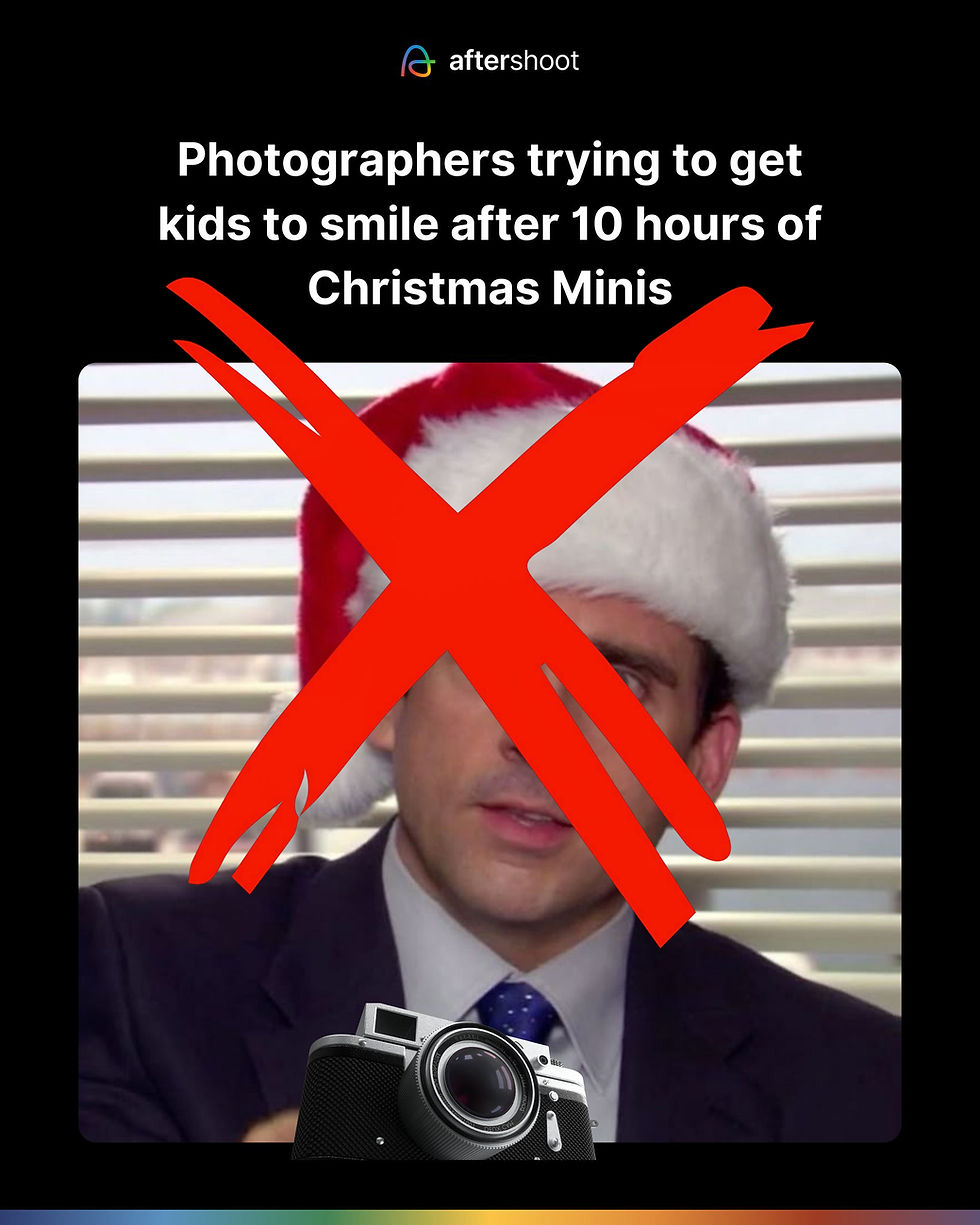
Aftershoot has taken the image featuring Steve Carrell from a Christmas episode and altered the image by adding a camera and pretending that he is a photographer.
In the next article, we’ll examine the most common myth brands rely on to justify this behavior: “fair use.”


Comments